Inside Cadana with Tania

Emmanuel Amegah
August 14, 2026
At Cadana, Growth Operations is about connecting the dots across the business to help teams move faster, solve problems, and ultimately create a better experience for customers.
In this episode of Inside Cadana, we sit down with Tania, our Growth Operations Lead, to learn about her journey from discovering Cadana at a remote workers meetup in Paraguay to becoming part of the team herself.
Tania shares what it’s really like working across sales, marketing, product, operations, and leadership, why curiosity and clarity are so important when solving complex problems, and how keeping the people behind the numbers in mind shapes the way she approaches her work.
And outside of Cadana? There’s a creative side you might not expect, including a love of psychological horror, writing short stories, and even a fascination with mathematics.
Let’s get to know Tania!
Can you tell us a bit about your journey and what brought you to Cadana?
The first time I heard about Cadana was at a remote workers meetup in Paraguay. Remote workers are always looking for the fastest and most reliable way to get their salaries. Everyone in the meetup had their preferred method; however, Cadana kept coming up as the best wallet in the region. It allowed you to send money directly to your bank account at reasonable prices and supported stablecoins, plus you could have a savings account or invest in stocks. I came from a world where wallets could barely connect to my bank, so a product that let you do all of that really piqued my interest.
I finally convinced myself to write to Albert after listening to one of his podcasts. He was talking about startups, about how to build a team, about this idea that there's real power in just reaching out. And so I did. A couple of calls later, I joined Cadana.
I try to choose my projects carefully, so whenever I join a company, it's because the work actually means something to me. Helping people access their money and the right financial tools is one of the most pressing struggles we face here in Paraguay (and across LATAM!), so this was a problem I genuinely wanted to solve.
Growth Operations touches almost every part of the business. How would you describe your role to someone who's never worked with a Growth Ops team?
There is never a good way to describe an operations role. It's a catch-all phrase for the people whose job is to ensure every moving part of the business is working the way it should. And that's exactly what makes it so interesting. One moment you're working on something sales-related, preparing decks or proposals, or making sure customers have all the resources they need, and the next moment you're solving a user issue, or you're reviewing a contract, or you’re working on numbers. It's hectic, it's always moving, and it keeps you engaged. I've worked in places where you specialize in one thing, and that tends to get pretty boring for me. Being able to work across different sides of the business, to learn everything I can about finance, compliance, legal, sales, operations, that's the part I really enjoy.
What's one project or initiative at Cadana that really challenged you or changed the way you think about solving problems?
One recurring theme I've found at Cadana is that problems are never fully solved. A good example is the work we do on statutory remittances. You might think you have everything figured out, and then one regulatory change in the Philippines throws off what the team has built, and you need to redo the work. So you revisit your work constantly, making sure the solution still makes sense, that it's still relevant, that it still fits the problem as it exists today and not as it existed six months ago.
Because of this, I try to approach every problem with a lot of curiosity, understanding how the moving parts fit together before I decide on the best course of action. And something I've been thinking about lately is that every day you’re armed with new information, new tools, new abilities, and a fresher view. So the problem may still be the same, but now you can ship a better solution.
What's one process or system you've helped improve at Cadana that has made a bigger impact than people might realize?
This might sound minimal, and it's not really a project or an initiative. It's mostly a way of thinking. I'm an anxious person by nature, my brain needs everything to have a schedule, to have a process that's clear, and stakeholders who are properly informed. So whenever I look at a new project, I'm running through the same questions: Who wants this and why? Who's doing it and when? What's the context behind it, and is this really the best solution, the best approach, or the best way we can tackle this? That turns out to be really useful whenever something needs clarity. I see my job (mainly) as bringing clarity to the people around me, and because of my natural disposition to align all pieces, I have a knack for finding (or creating) clarity.
Growth Ops often sits at the intersection of sales, marketing, product, and leadership. How do you balance the needs of different teams while keeping everyone moving in the same direction?
For me, it comes down to the fact that everyone is already moving in the same direction. They just have different ways to get there. Because of my role, the ultimate goal is always facilitating our customers’ work, and making sure they have everything to succeed. And, at the core, everyone is working on the same goal. So I see it less as aligning everyone on the direction, and more as aligning them on the path.
When you start from that common ground, from the fact that we're all working toward the same goal, it's much easier to influence people. It's much easier to bring different teams together around what needs to happen in the next hours, the next days, the next weeks, the next month. My biggest takeaway is that you never start from zero. You never start a conversation from scratch. Whenever we're weighing different approaches or figuring out our next steps, everything we build comes from what customers are telling us and how they're feeling, and from real data points. Nothing comes out of thin air, and that's what drives the narrative around what needs to be done.
What do you enjoy most about being part of the team at Cadana?
Cadana is full of talented, driven people. I feel surrounded by people who are always trying to do things better for others, so that's actually very rewarding. Our mission is relevant, the problem we're solving is relevant, and the people I work with are genuinely good. We're tackling tough challenges every single day, but the environment is empowering, and it makes you feel that, despite any adversity, at the end of the day, we're going to succeed in everything we put our minds to.
Looking back, what's one lesson or piece of advice that has shaped how you approach your work today?
Before joining Cadana, I spent time working in the social sector. That world is people-driven; it's about trying to make a real impact in other people's lives. That has stayed with me, and it's something Albert brings up a lot too. I appreciate that he does, because on the other side of the equation, there's always a person just trying to earn their salary on time.
When you're working with so much volume and so much data, it's easy to start thinking about people in the abstract. But it's always worth thinking about them in the real sense. When a new company comes to Cadana, that's an opportunity for workers to access better financial tools and better financial opportunities, and that improves people's lives. I've experienced these barriers first-hand, and I've seen people struggle with them. So keeping people in mind when tackling our work is highly important, and it’s a great compass to use when you’re struggling to find direction among the noise.
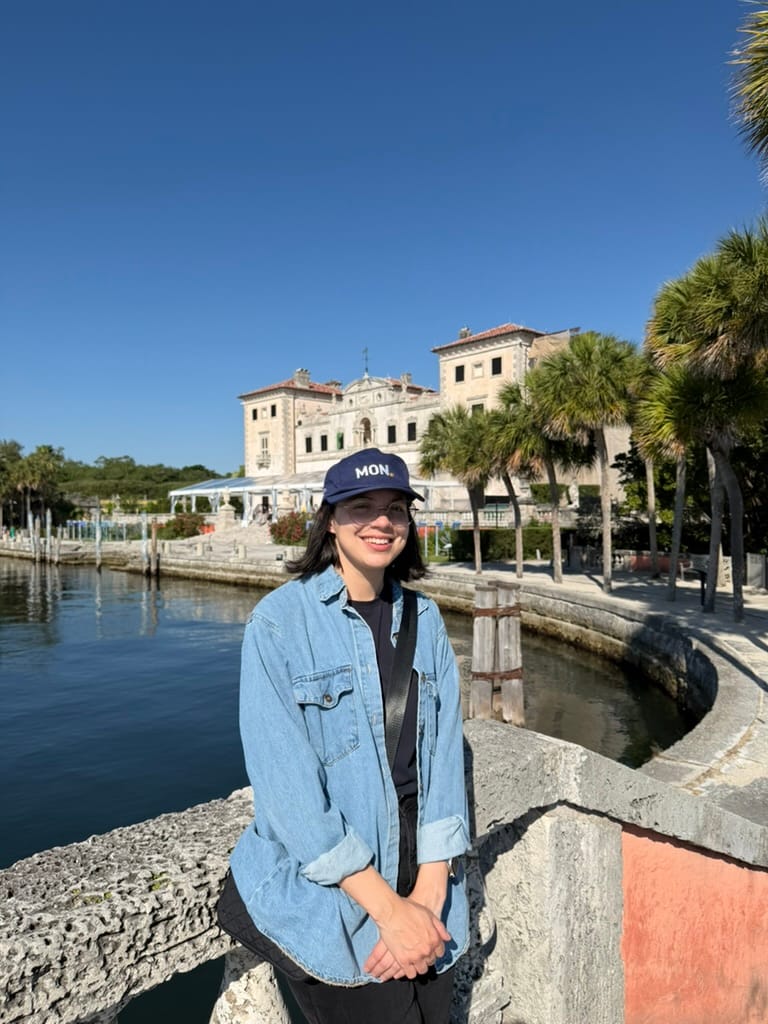
If someone shadowed you for a day, what part of your job do you think would surprise them the most?
The amount of research it takes. Even after six months here, I don't think I hold even 10% of the knowledge the people around me have. This is global payroll and global statutory payments, which means understanding the ins and outs of a lot of different countries, each operating through different mechanisms and at different technological levels. So it takes a lot of research just to understand how payroll works in a given country. Thankfully we have a lot of internal knowledge to draw on, but it still takes real research and assimilation to absorb it. That's part of what makes the work interesting, though. You have to take in a huge amount of very specific knowledge in order to help someone else. Sometimes you research for days just to write a one-line solution.
What's one misconception people have about Growth Operations or operational work in general?
Operations can mean a lot of things. Honestly, it can mean almost anything. That's what makes it feel expansive, because you get a lot of leeway in terms of where you contribute and where you put your time and attention. There are many parts of the business you can step into and improve from this seat. Maybe one misconception people have is that this is a fixed role with clear limitations, when it’s actually quite the opposite.
Outside of work, what's something people might be surprised to learn about you?
I love short horror stories, and I used to write them. Before I started working, I really thought my calling was to become the next Edgar Allan Poe or H.P. Lovecraft, writing intense psychological horror or immersing myself in convoluted stories of cosmic horror. I find far more joy now in helping others, because the impact is tangible. It's progress you can actually see, and I get to put all my brainpower into solving problems. But there's always a creative itch I need to scratch, so on the weekends, I still write.
If you could instantly master one skill outside of work overnight, what would it be?
I don't know if I'd actually want to learn it overnight, because that would kill the joy of progress, but I'd love to get more proficient at math. I had a friend whose hobby was to pull out a Baldor book and just start working through problems, and I really loved that idea. At one point in my life, I got very interested in the lives of mathematicians and how they thought. For me, math is one of the most interesting ways to start experimenting, to form assumptions and test them against the real world, seeing what holds and what collapses.
It's a fascinating mix of creativity and rule-making, since it's constrained by consistency, where you're supposed to get the same result over and over again. I still haven't reached the point where I can pick up a Baldor book and solve problems for fun, but I've been circling the idea for so long that maybe I should just start.
Emmanuel Amegah