Why More Businesses Are Ditching Spreadsheets for Payroll Tax Software

Emmanuel Amegah
August 1, 2025
For years, spreadsheets were the default tool for managing payroll. Simple, accessible, and familiar, until they weren’t enough. Now, businesses across industries are switching to payroll tax software. Why?
Because compliance is getting harder, teams are growing across borders, and spreadsheets weren’t built for any of it.
Let’s unpack what’s driving the shift, and why payroll tax software is no longer a nice-to-have, but a must-have.
1. Compliance Is No Longer Static
Tax laws aren’t just changing annually, they’re evolving monthly across jurisdictions. Spreadsheets can’t notify you when:
- Income tax brackets shift
- Deduction thresholds change
- A new statutory form is required
Modern payroll tax software automatically adapts to these changes, applying the correct logic for every country, every pay period.
2. Manual Errors Can Get Very Costly
From mistyped figures to formula bugs, spreadsheet errors are almost inevitable. For payroll teams, one slip can mean:
- Overpaying or underpaying staff
- Penalties from tax authorities
- Eroded employee trust
A payroll tax software minimizes human error by standardizing and automating calculations — with audit trails to back every result.
3. Spreadsheets Don’t Scale
As businesses grow into new countries or onboard more workers, spreadsheet complexity balloons. Soon, you’re juggling:
- Different tax systems per region
- Employee-specific deductions
- Manual updates for every new payroll run
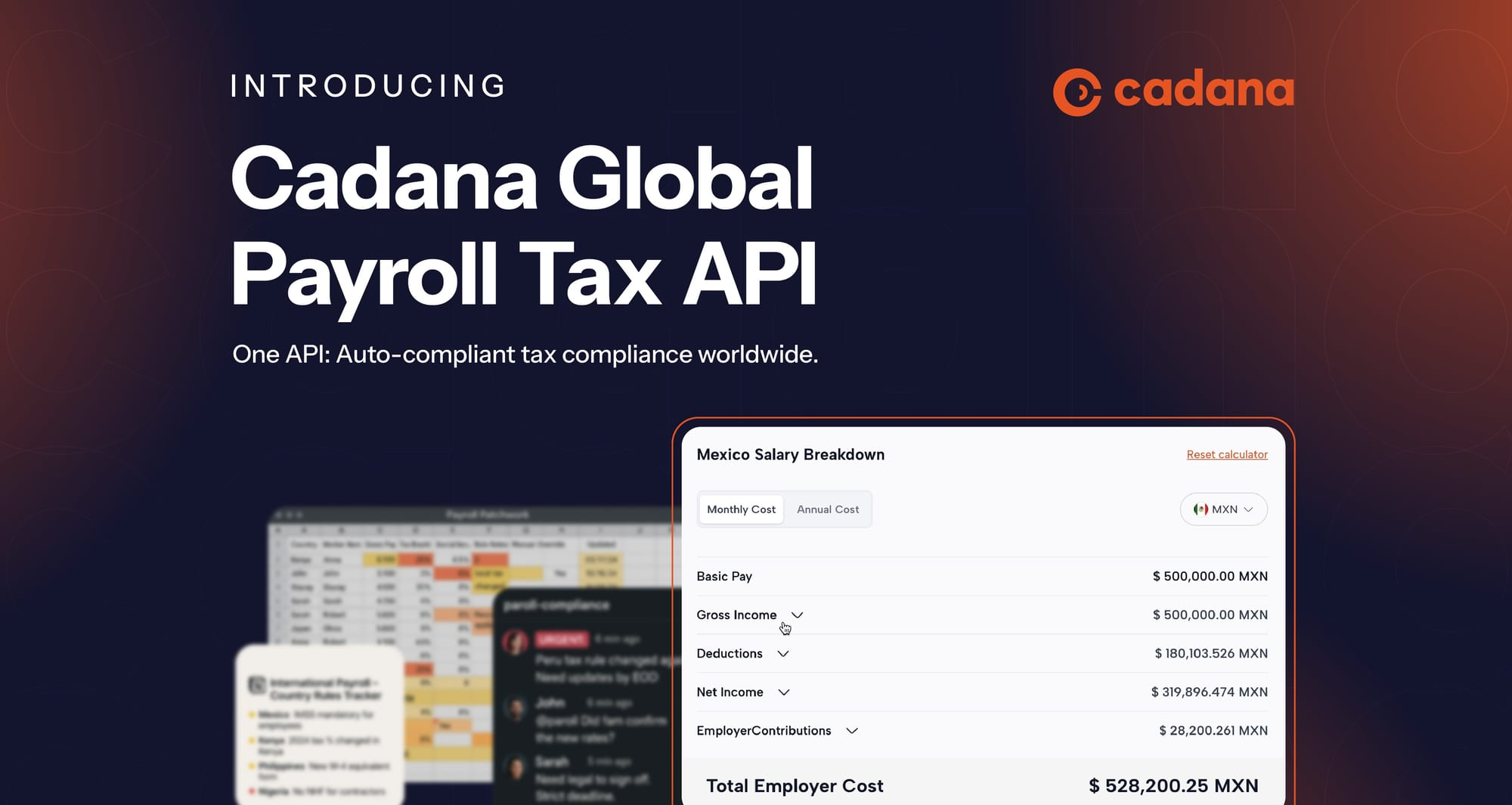
Payroll tax software does the heavy lifting — whether you’re paying 5 employees or 5,000. It handles gross-to-net calculations, real-time rule changes, and multi-country workflows in a few clicks. Check out how Cadana's Payroll Tax Calculator Software works.
4. Time Spent Manually = Time Lost Strategically
Payroll teams are often bogged down with:
- Chasing tax updates
- Rebuilding Excel templates
- Manually inputting figures
That’s time that could be spent analyzing workforce costs, optimizing benefits, or supporting business expansion. Automation turns payroll into a strategic function, not just a back-office task.
5. Reporting and Audits Are Streamlined
Need a quick report for finance? Preparing for an audit? Spreadsheets often mean copying, pasting, and reformatting. In contrast, modern software offers:
- Built-in, real-time reporting dashboards
- Instant tax summaries per jurisdiction
- Export-ready formats for authorities or internal reviews

So… Why Are Businesses Making the Switch?
Because today’s payroll requires more than accuracy — it requires agility. And spreadsheets simply don’t evolve with tax rules, business needs, or workforce models.
If you’re still managing payroll tax with spreadsheets, it’s worth asking:
- How much time are we spending on manual processes?
- How confident are we in our compliance across regions?
- What would happen if one formula broke right before payday?
A Payroll tax software answers these questions with clarity, compliance, and peace of mind.
Cadana’s global payroll infrastructure helps you automate PAYE, gross-to-net, and tax reporting across 100+ countries.
Emmanuel Amegah