Why More Platforms Are Adopting White-Label Payroll to Accelerate Global Expansion

Emmanuel Amegah
December 8, 2025
As platforms evolve to support global workforces, payroll has become one of the most sought-after features, but also one of the hardest to build. Managing taxes, social contributions, onboarding forms, and payout rules across multiple countries introduces a level of complexity most teams are not equipped to handle internally.
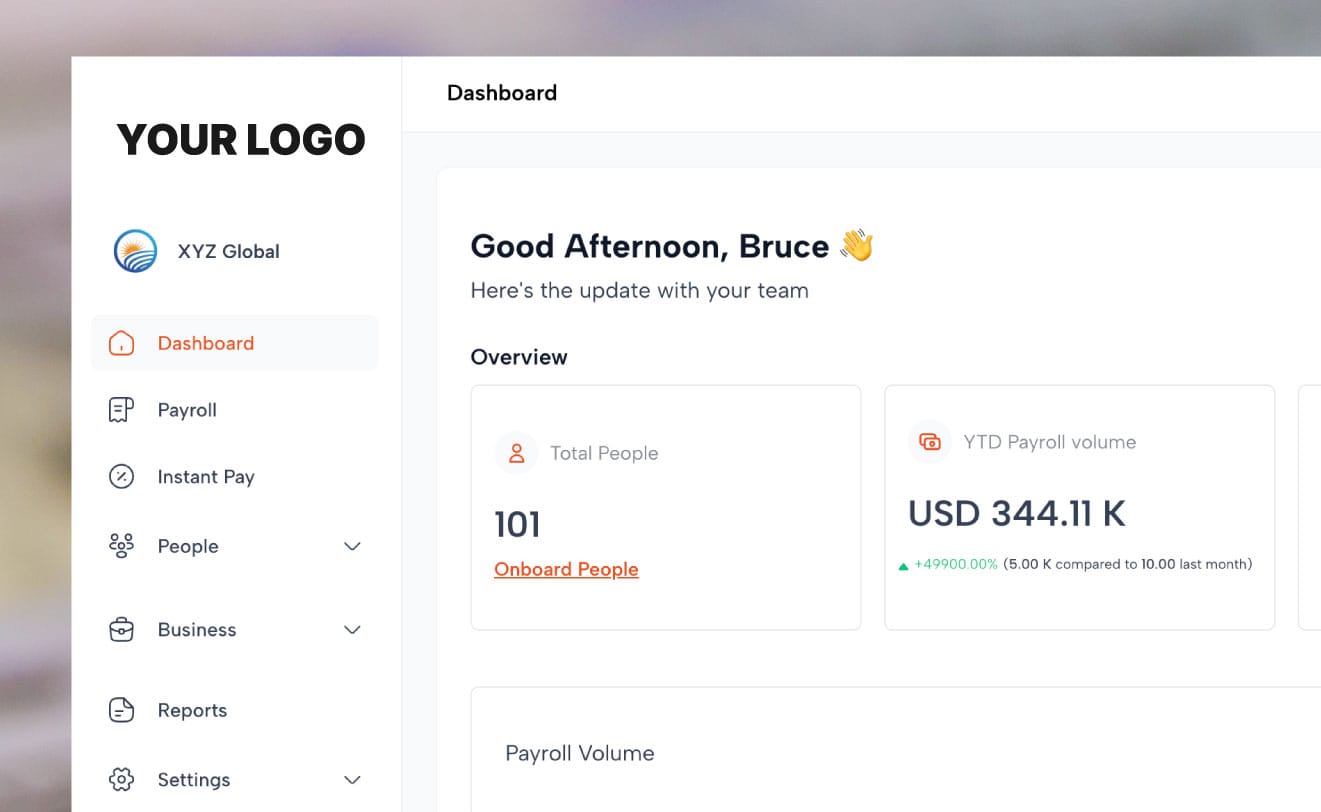
To meet customer expectations without slowing down product development, more platforms are adopting white-label payroll infrastructure. It allows them to offer full payroll capabilities under their own brand, powered by a compliant, API-first backend they don’t need to maintain themselves.
The result? Faster launches, global readiness, and the ability to win customers that previously required advanced payroll features.
The Challenge

Whether you’re building a HRIS, HCM, talent marketplace, staffing platform, or global payments product, customers increasingly expect:
- Support for employees and contractors in multiple countries
- Automated gross-to-net and net-to-gross calculations
- Tax compliance that updates as laws change
- Transparent, auditable logic
- Localized onboarding forms and documentation
- Real-time payouts
Building this from scratch can take years. Maintaining it requires ongoing teams across engineering, finance, legal, tax, and compliance, and even then, the risk of errors remains high.
Most platforms don’t want to become global payroll companies. They just want payroll to work.
This is exactly where white-label payroll infrastructure comes in.
What White-Label Payroll Really Means
With white-label payroll, platforms can offer payroll under their own brand while outsourcing the heavy lifting to a provider like Cadana.
You control the experience. You own the customer relationship.
The infrastructure handles compliance, taxes, and calculations.
Cadana’s Global Embedded Payroll Tax Engine powers:
- Gross-to-net calculations across 100+ countries
- Automatic regulatory updates
- Jurisdiction-specific onboarding forms
- Real-time payroll tax compliance
- Transparent tax logic
- API-based integration for seamless embedding
Your product becomes payroll-enabled without turning payroll into an engineering nightmare.
Why Platforms Are Adopting White-Label Payroll
1. Faster Global Expansion
Launching payroll in one country is difficult. Launching in ten is overwhelming.
White-label infrastructure reduces expansion from years to weeks.
Platforms can immediately support hiring in markets such as Ghana, Kenya, Nigeria, the Philippines, and South Africa, all without hiring local tax experts.
2. Win Bigger, Enterprise-Level Deals
Enterprise customers expect global payroll support.
Without it, platforms lose deals to more complete competitors.
White labeling payroll allows platforms to win and retain customers that require:
- Multi-country payroll
- Contractor and employee support
- Cross-border payments
- Localized compliance workflows
3. Reduce Compliance Risk
Payroll is high-stakes. Non-compliance leads to:
- fines
- taxes owed
- delayed payments
- reputational damage
White-label payroll shifts this risk to infrastructure built specifically for high-compliance markets.
4. Monetize Payroll Without Building It
White-label solutions enable new revenue streams:
- Payroll subscriptions
- Employee and contractor management fees
- Value-added services
- FX margins (if applicable)
Platforms that integrate payroll typically see higher retention and increased average revenue per customer.
5. Scale Engineering Teams More Efficiently
Instead of maintaining:
- tax tables
- onboarding logic
- jurisdiction-specific rules
- reporting requirements
Engineering teams get to focus on core product improvements.
White-label infrastructure eliminates the need for ongoing tax engineering, lowering costs and reducing operational overhead.
Why Companies Start With a Salary Calculator
Before committing to a full payroll offering, many platforms start with simple tools like the salary calculator to give their users:
- Gross-to-net insights
- Employer cost estimates
- Local taxation clarity
It creates immediate value without engineering complexity, and becomes the natural bridge into white-label payroll.
From Calculator to Embedded Payroll Infrastructure
Once platforms see user demand, they often graduate to embedded infrastructure.
This allows them to fully automate:
- payroll runs
- tax calculations
- onboarding flows
- compliance logic
- multi-country support
Cadana handles the compliance complexity behind the scenes while the platform keeps complete control of the front-end experience.
To explore how this works, you can book a demo and see real-world examples of platforms using Cadana’s infrastructure.
White-Label Payroll Is Becoming the Global Standard
As the workforce becomes more distributed and companies hire across continents, platforms that lack payroll capabilities will fall behind.
White-label payroll gives them the capability without the burden.
It delivers:
- faster global expansion
- scalable compliance
- increased revenue
- a stronger product offering
- an all-in-one experience customers actually want
In a world where talent is global, payroll must be global too, and platforms that adopt white-label infrastructure will be the ones who lead the next wave of workforce innovation.
Emmanuel Amegah